Lawmakers in Washington have once again introduced an unidentified aerial phenomena (UAP) Amendment
for the forthcoming FY 2023 National Defense Authorization Act (NDAA),
an annual piece of legislation that provides the budget for the
Department of Defense.
Representative Mike Gallagher of the House Armed Services Committee has introduced an Amendment that builds on the historic gains passed in the FY 2021 NDAA when the UAP Task Force was established, and which mandated the reporting of UAP events.
Fundamentally, the new language
proposed for inclusion in the 2023 NDAA focuses on reporting procedures
related to UAP, along with ensuring transparency on information the
Pentagon collects about unrecognized aerial objects encountered by
members of the armed forces. The bill’s language calls for ensuring that
data collected about UAP is shared with the UAP Task Force’s successor,
the Airborne Object Identification Management and Synchronization Group
(AOIMSG), as well as by offering protections for those who come forward
with such information.
Among the key elements included within the bill’s language are takeaways that include:
- Nondisclosure orders and written agreements will not prohibit the disclosure of UAP information to the UAPTF or the Office.
- That
the Intelligence Community shall establish a system for reporting of
UAP-related information, regardless of classification level, to the
UAPTF or the Office.
- Language
calling for the protection of witnesses that share UAP-related
information from liability, as well as retaliation, for the breach of
NDA.
Background: On Classified Information and Nondisclosure Agreements
Executive Order 13526: In December of 2009, President Obama issued Executive
Order (EO) 13526, which revoked and replaced EO 13292 (amended March
2003) and became the latest order to outline how national security
information would be classified, safeguarded, and ultimately
declassified. An Executive Order is a directive by the President of the
United States that has the effect of law.
EO 13526 kept in effect the
long-standing levels of classification that included Top Secret, Secret,
and Confidential. The authority to classify information is derived from
the Order and is held by the President and Vice President, agency
heads, and Government officials delegated with the authority to do so.
There are two methods for information to become classified:
Sec. 2.1 Derivative Classification
– Would be the person who “reproduce, extract or summarize classified
information” or generates products from a source that is already
classified. An example would be if a product is produced from a Top
Secret source, then the product would then be classified at the same
level as the source. (https://www.archives.gov/isoo/policy-documents/cnsi-eo.html Sec. 2.1)
Sec. 2.2 Original Classification Authority
(OCA) – Would be a senior government official or the senior agency
official with program or supervisory responsibilities can make an
initial determination that information requires protections from
unauthorized disclosure.
In order to access classified
information, a person must meet certain defined criteria. First, they
must pass a favorable background investigation. Second, the person must
be trained on the proper safeguarding and handling of classified
material, as well as the sanctions that may be imposed on a person who
fails to protect classified information. Third, the person must have a
need to know in order to access the classified information. Most
importantly, the person must also have signed a nondisclosure
agreement.
SF312: The Classified Information Nondisclosure Agreement Form SF312
is a contractual agreement between the cleared individual and the
United States Government. Within the agreement, the signatory
acknowledges that they are bound, have received, and understand the
nature and need to protect classified information as well as the
procedures to do so.
Furthermore, a breach of the
agreement or unauthorized disclosure of protected information could
result in loss of security clearance, assignment of all royalties
resulting in the disclosure, and possibly criminal prosecution under
Title 18 U.S. Code, Section 798.
Analysis: NDAA Amendment Unidentified Aerial Phenomena Reporting Procedures
Establish a System for Reporting: The
Amendment introduced by Representative Mike Gallagher moves to address
issues that have possibly been a hindrance to the disclosure of
UAP-related incidents to the Unidentified Aerial Phenomena Task Force
(UAPTF) or the “Office” and our elected officials of the various
intelligence committees.
“The
head of the Office, on behalf of the Secretary of Defense and the
Director of National Intelligence, shall establish a secure system for
receiving reports of
-
- Any event relating to unidentified aerial phenomena; and
- Any Government or Government contractor activity or program related to unidentified aerial phenomena.”
Should the Amendment become Law, the
newly established system will continue to provide long-standing
protections against unauthorized disclosure of “classified military and
intelligence systems, programs, and related activity” to include all
categories of special access and compartmentalized access programs.
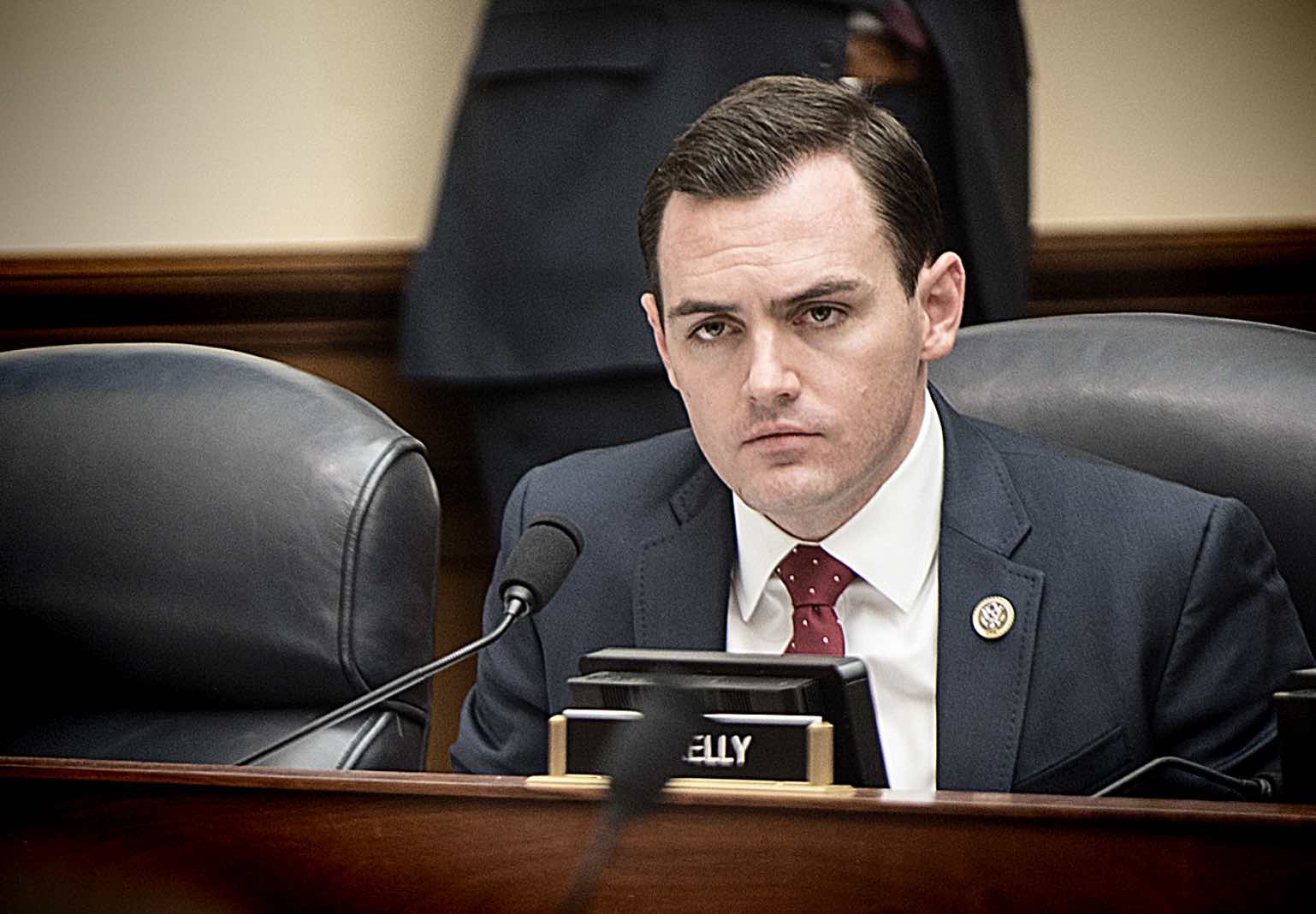
.S.
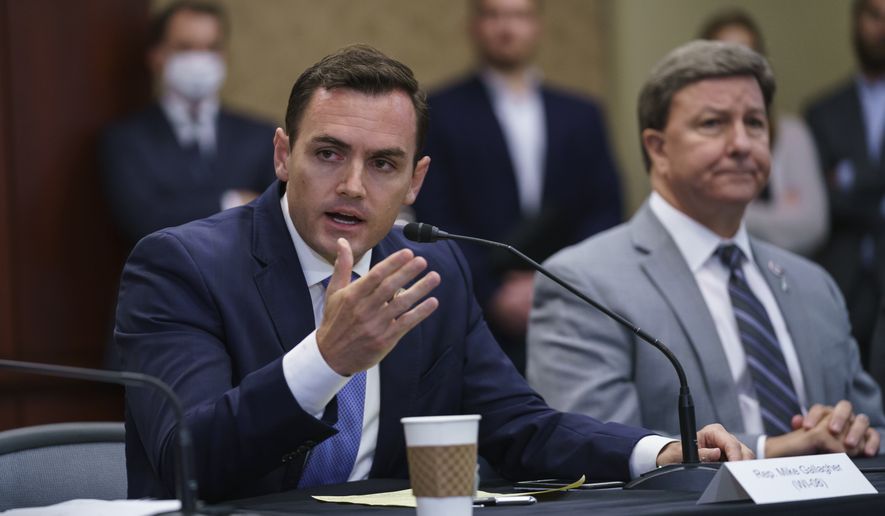
Rep. Mike Gallagher questions senior military leaders during a House
Armed Services Committee hearing on March 7, 2017 (Credit: Chairman of
the Joint Chiefs of Staff/CC 2.0).Sharing of Information: The
legislation continues to provide the UAPTF, or the Office with the
ability to clear the bottleneck of reporting by allowing those with
information, to directly provide it to those responsible for
investigating UAP incidents.
“The
system… shall provide for the immediate sharing with the Office
personnel and supporting analysts and scientists of information
previously prohibited from reporting under any nondisclosure written or
oral agreement.”
An exception to sharing of
information with the Office would be if the observed object and events
were related to a Special Access Program (SAP) that has “explicitly and
clearly” been reported to congress already.
Furthermore, the Gallagher Amendment
directs the Secretary of Defense, Director of National Intelligence,
Secretary of Homeland Security, and heads of other department agencies
to search records for all related documents relating to witnesses of UAP
and make them available to the Office with the records to be available
for congressional committees no later than Sept. 30, 2023.
Protection From Liability, Prosecution and Reprisal: Reports
made to UAPTF or the Office, which would previously have been
prohibited as “knowing and willful transmittal of classified information
to an unauthorized person” under Title 18, Section 798, will not be
prosecuted as long as they are made in compliance with this Amendment.
The language drafted by
Representative Gallagher not only protects witnesses that come forward
from official sanctions and prosecutions but also extends that
protection from workplace reprisals.
“An
employee of a Federal agency and an employee of a contractor for the
Federal Government who has authority to take, direct others to take,
recommend, or approve any personnel action, shall not, with respect to
such authority, take or fail to take, or threaten to take or fail to
take, a personnel action, including the revocation or suspension of
security clearances, with respect to any individual as a reprisal for
any reporting as described…”
If a person of authority takes
retaliatory actions against a witness, not only may the witness seek
remedies such as injunctive relief, compensatory, and punitive damages
in a civil suit, but the injured party may seek relief from the
individual accused of conducting the reprisal.
Outlook: What the New UAP Legislation Means for 2023, and Beyond
In effect, this legislation would
allow for witnesses or personnel, who have information or data at a
higher classification level or SAP, to provide members of UAPTF or the
Office with data that UAPTF are not cleared for or “read-into.”
Additionally, by doing so, witnesses or personnel, who would otherwise
be breaching their NDA by disclosing information, will no longer be
found to be in breach, and therefore are free from prosecution or
sanctions.
A hypothetical situation that may
arise from this could be as follows: An analyst, working with an
intelligence agency (NRO / NGA / CIA / NSA etc), has data relating to
UAP that is within a Sensitive Compartmentalized Information (SCI)
program or Special Access Program (SAP) that the UAPTF or the Office
members are not read into, and therefore do not have access to.
With the passing of the legislation
discussed in the proposed NDAA amendment, that agency analyst will be
able to disclose the data to UAPTF or the Office members without fear of
violating their nondisclosure agreement or reprisal from their chain of
command or employer.
The legislator’s intent is clearly
put forth in this latest piece of drafted law contained within the
Gallagher Amendment: Congress wants data shared with those tasked with
investigating UAP and there will be no more hiding behind security
classifications or NDAs.
Sean Munger and Craig Labadie
Source