
Background
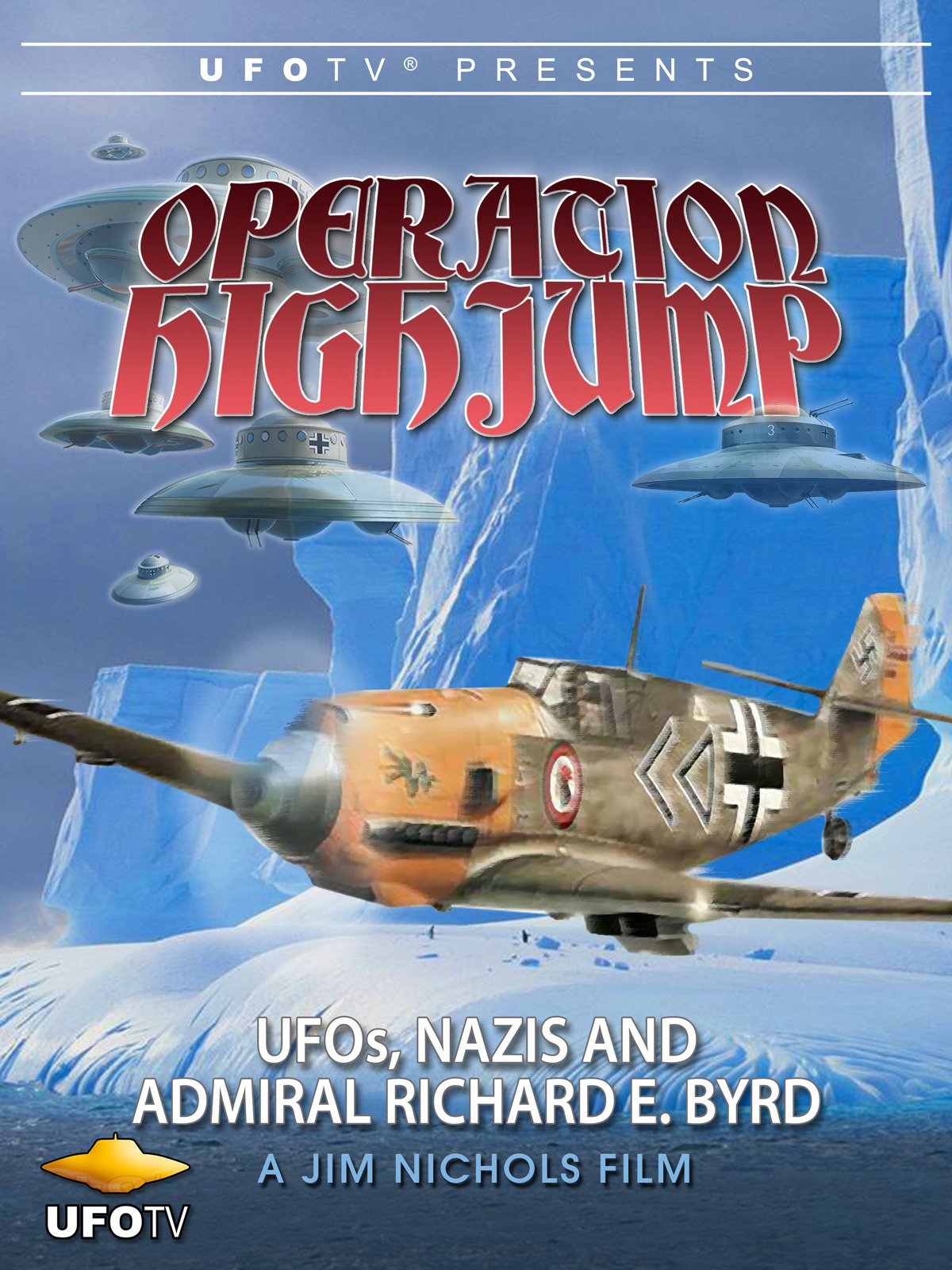
Operation Highjump, officially titled The United States Navy Antarctic Developments Program, 1946-1947, was a United States Navy operation organized by RADM Richard E. Byrd Jr. USN, (Ret), Officer in Charge, Task Force 68, and led by RADM Richard H. Cruzen, USN, Commanding Officer, Task Force 68. Operation Highjump commenced 26 August 1946 and ended in late February 1947. Task Force 68 included 4,700 men, 13 ships, and multiple aircraft. The primary mission of Operation Highjump was to establish the Antarctic research base Little America IV.
The following are documents related to, or mentioning, Operation Highjump:
 Report Bibliography: Operation Highjump [8 Pages, 4.57 MB] – Report Bibliography of documents from the Defense Technical Information Center
Document Archive
America on the Ice. Antarctic Policy Issues, 1990
[364 Pages, 13.70 MB] – Partial contents include: (1) Antarctica Before
the Treaty, rival territorial claims–cold war dimension–international
geophysical year– conference on antarctica; (2) The Antarctic Treaty
System, duration–scope–an arms control agreement–a claims settlement-a
science compact–an administrative framework–recommendations–convention
for the conservation of antarctic seals– convention on the conservation
of antarctic marine living resources; (3) Challenges to the antarctic
Treaty System; antarctic resources–participation in antarctic
policymaking–The sovereignty time bomb; (4) U.S. Interests in the
Antarctic and Current U.S. Policy, and the U.S. Antarctic Program,
scientific activities–antarctic stations–logistics support-managing the
logistics program–maintaining and influential american presence in the
years ahead.
Cold-Weather Engineering, Chapters 1 to 5, 1949 [122 Pages, 41.30 MB]
COMPACTED-SNOW RUNWAYS IN ANTARCTICA, DEEP FREEZE 61-64 TRIALS, Feb 1966
[51 Pages, 13.70 MB] – In Deep Freeze 61, NCEL provided technical
guidance to a Navy snow- compaction team investigating the
practicability of building roads on snow- covered sea ice over McMurdo
Sound and runways on the deep snow cover of the Ross Ice Shelf adjacent
to McMurdo Station. These investigations and trials continued through
Deep Freeze 64. This work was directed toward the development of a
layered, compacted-snow runway on deep snow which would support aircraft
weighing up to 155,000 pounds with tires on the main wheels inflated to
135 psi; it was only partially successful. During the trials, there
were intermittent areas of compacted snow capable of supporting aircraft
weighing up to 100,000 pounds with main tires inflated to 90 psi, but
low-strength areas prevented takeoffs and landings with aircraft
weighing over 25,000 pounds with main tires inflated to 60 psi. New
processing and elevating equipment introduced in the Deep Freeze 64
trials showed considerable promise of producing dense, uniform, high
-strength, elevated areas of compacted snow. It was concluded that the
trials should continue in Deep Freeze 65 to explore the capabilities of
this equipment.
Notes on Antarctic Aviation, Aug 1993
[156 Pages, 8.92 MB] – Antarctic aviation has been evolving for the
best part of a century, with regular air operations developing over the
past three or four decades. Antarctica is the last continent where
aviation still depends almost entirely on expeditionary airfields and
‘bush flying,’ but change seems imminent. This report describes the
history of aviation in Antarctica, the types and characteristics of
existing and proposed airfield facilities, and the characteristics of
aircraft suitable for Antarctic use. It now seems possible for Antarctic
aviation to become an extension of mainstream international aviation.
The basic requirement is a well-distributed network of hard-surface
airfields that can be used safely by conventional aircraft, together
with good international collaboration. The technical capabilities
already exist.
Observations of Radar Propagation and Influencing Meteorological Factors during the 1946-47 Antarctic Expedition, 10 June 1947 [18
Pages, 1.42 MB] – Admiral Byrd’s antarctic expedition of 1946-47
offered an excellent opportunity to study radar wave propagation and
low-level meteorological conditions which exist about the Antarctic
Continent. Although a great deal has been reported concerning the
general meteorology of the antarctic, the conditions which affect the
ranges of radar have never been stressed due to the relatively recent
development of radar and use of the radio frequencies concerned. This
report deals with the radar and meteorological measurements that were
made during the cruise of the Western Task Group of Operation HIGHJUMP.
Most of the measurements reported were made aboard the seaplane tender
USS CURRITUCK. This tender made available the convenient use of PBM and
helicopter aircraft. The antarctic portion of the cruise was made during
the antarctic summer months, between 22 December 1946 and 4 March 1947.
The ship kept a close proximity at all times to the continental ice
pack which extends about 50 to 150 miles from the continent in most
regions. The area covered lay between 180 degrees east longitude and 34
degrees east longitude during the above-mentioned period.
The Polar Submarine and Navigation of the Arctic Ocean, 21 May 1959
[91 Pages, 4.94 MB] – This is a reissue of the original report without
any changes (except for the inclusion of an addendum written in May
1950). The report evaluates observations made on polar voyages up to and
including 1948, and discusses the equipment and modifications needed to
make a Fleet-type submarine suitable for under-ice research.Th
Protecting United States Interests in Antarctica, April 1988
[124 Pages, 4.94 MB] – This thesis begins by presenting a geographic
overview of the physical features and resources in Antarctica and the
Southern Ocean. Next, it details the history of claims and interests
over Antarctic territory, with particular emphasis on United States
activities. Aspects of the U.S.-initiated Antarctic Treaty regime are
then explored, including management of living resources and potential
exploration and exploitation of nonliving hydrocarbon and mineral
resources. The thesis points out past weaknesses in U.S.-Antarctic
policy making, and recommends a broader role for the Department of
Defense in such areas as safety and security. The thesis also recommends
that the Antarctic Treaty consultative parties resolve the issue of
criminal jurisdiction over offenses committed in Antarctica before the
theoretical problem arises in practice, suggesting a model fashioned
somewhat after the North Atlantic Treaty Organization’s Status of Forces
Agreement. Finally, the thesis highlights the recent influence of the
United Nations over Antarctic affairs, and proposes that the governing
Antarctic Treaty consultative parties should cooperate more with the
United Nations to avoid confrontation over the impending minerals
regime. Suspension of South Africa from consultative status is
recommended as a means of dampening United Nations’ opposition to the
minerals regime, and of preventing eventual dissolution of the regime
over these and other issues.
SNOW-COMPACTION EQUIPMENT–VIBRATORY FINISHERS
[34 Pages, 1.24 MB] – To investigate the feasibility of
surface-hardening compacted snow by vibrationand, if feasible, to
develop vibratory finishers for this work.
Some Oceanographic Observations on Operation HIGHJUMP, 07 July 1948 [103
Pages, 10.11 MB] – *CONTENTS* INTRODUCTION; PHYSICAL OCEANOGRAPHIC
OBSERVATIONS IN THE ANTARCTIC: Thermal Structure of the Surface Layers,
Sea Surface Temperatures, Antarctic Convergence, Depth of the Surface
Layer as an Indication of Currents, Internal Waves, Temperature and
Salinity, Sea Water Transparency Measurements, Antarctic ‘Seeing’, and
Icebergs and Sea Ice; GEOLOGICAL OBSERVATIONS: Antarctic Sea Floor
Sediments, Some Pacific and Antarctic Sea Floor Features, and Ice-Free
Areas in Antarctica; BIOLOGICAL OBSERVATIONS: Biota, Marine Plankton
Diatoms on Operation HlGHJUMP, Natural Slicks in the Pacific and
Antarctic Oceans, and Deep Scattering Layer in the Pacific and Antarctic
Oceans; and BIBLIOGRAPHY.
U.S. Navy Antarctic Development Project 1947: Report of Operation Highjump, 10 June 1947 [538 Pages, 14.68 MB]
Jhon Greenewald


No comments:
Post a Comment
Note: Only a member of this blog may post a comment.